HomeBiofeedback and HRV Training
Biofeedback and HRV Training
Helping you feel calmer, more balanced and more in control
Biofeedback is a gentle, non-invasive approach that helps you understand how your body responds to stress.
At Celtic Neurofeedback, we use Heart Rate Variability, or HRV, biofeedback to help you learn how breathing, attention and emotional state can influence your nervous system.
The aim is to help you develop practical skills that support calmness, emotional regulation and recovery after stress.
Global Leaders Trust Evervault

What is Heart Rate Variability?
The equipment we use
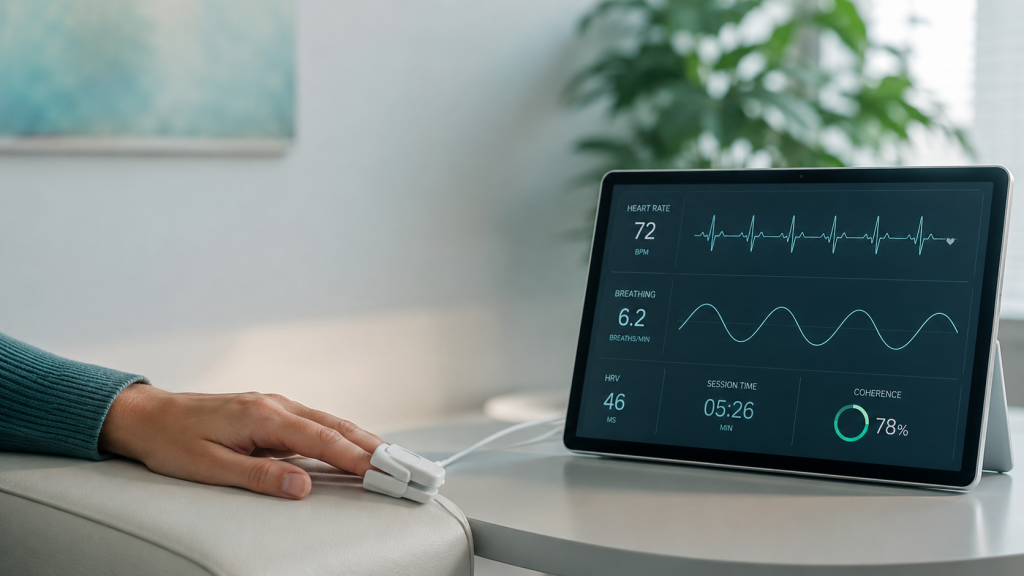
We use a professional HRV biofeedback system designed for clinical and professional settings.
Using a comfortable earlobe sensor and a specially designed fingertip sensor, the system measures the small intervals between each heartbeat and calculates Heart Rate Variability, or HRV.
The results are displayed on a computer screen in real time, allowing you and the clinician to observe how your heart rhythm responds to:
Normal breathing
Guided breathing
Relaxation exercises
Changes in attention
Emotional activation
Recovery after stress
How does biofeedback work?
During a session, the sensors measure your heart rhythm while you sit comfortably.
The information is displayed on a screen so you can see how your body responds to breathing, attention and relaxation exercises.
You are then guided through simple breathing exercises designed to help your heart rhythm and breathing work together more smoothly.
The aim is not to breathe as deeply as possible or achieve a perfect score. The focus is on breathing gently, comfortably and at a pace that suits you.
Guided breathing
Guided breathing can help you develop a calm and steady breathing rhythm.
You may follow a visual image, sound or gentle cue that shows you when to breathe in and when to breathe out.
Many people find that slower breathing helps them feel more settled. However, everyone is different, so the breathing pace is adjusted according to your comfort and response.
You will never be expected to force your breathing.
Optional light and sound support
Some people find it difficult to follow verbal breathing instructions, especially when they are anxious, distracted or experiencing racing thoughts.
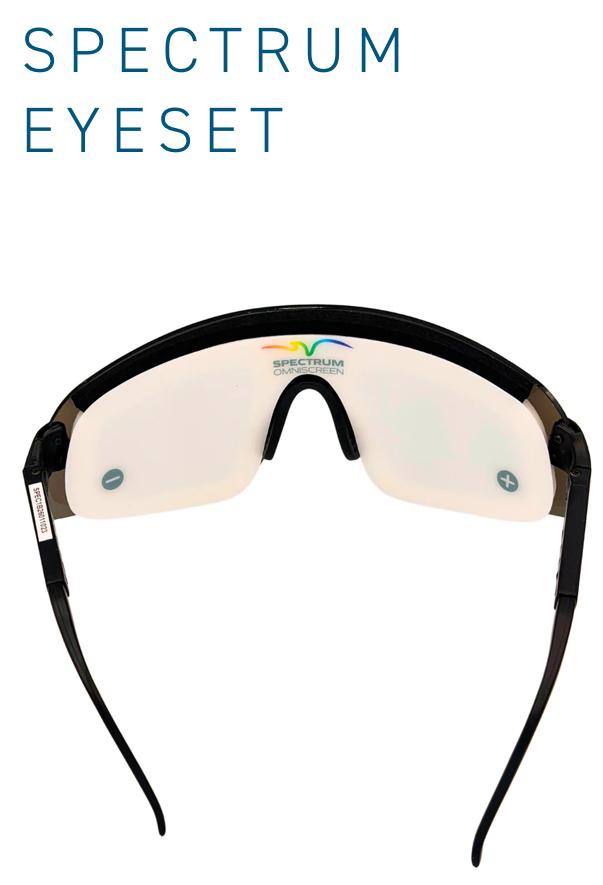
For this reason, we can offer optional Audio-Visual Entrainment, or AVE, using a specialised eyeset that delivers controlled, rhythmic light stimulation through closed eyelids. The visual stimulation can be synchronised with breathing cues and, where appropriate, auditory signals to support attentional focus, relaxation and autonomic regulation.
The eyeset uses changing colours and structured light patterns to help guide breathing and create a more immersive relaxation experience.
Some clients find this more relaxing, intuitive and easier to follow than spoken instructions alone.
Audio-visual support may help you:
Focus your attention
Reduce racing thoughts
Follow a breathing rhythm more easily
Feel less pressured by verbal instructions
Settle into a calm and repetitive pattern
Take a structured breathing break during periods of stress
This part of the session is always optional and can be adapted to your sensory preferences.
Who may benefit?
HRV biofeedback may be helpful for people experiencing:
Stress
Anxiety
Emotional overwhelm
Difficulty relaxing
Racing thoughts
Sleep preparation difficulties
Physical tension
Concentration difficulties
Burnout
Performance anxiety
Difficulty recovering after stressful situations
Autism or ADHD-related regulation difficulties
What happens during a session?
A short discussion
We begin by talking about how you have been feeling, your current stress levels and what you would like help with.
A baseline recording
Your heart rhythm is measured while you sit comfortably and breathe normally.
Guided breathing
You are introduced to a calm and comfortable breathing rhythm.
Real-time feedback
You can see how your heart rhythm responds as your breathing changes.
Optional light and sound support
Where appropriate, gentle audio-visual cues may be used to make the breathing exercise easier to follow.
Review
At the end of the session, we discuss what you noticed and which approach felt most helpful.
Our biofeedback programme
Sessions 1 to 3
These sessions focus on understanding your stress response, measuring your baseline HRV and finding a breathing rhythm that feels comfortable.
Sessions 4 to 6
You begin practising the skill more confidently and may be introduced to optional light and sound support.
Sessions 7 and 8
The focus moves towards using the technique during everyday challenges, concentration tasks or emotionally demanding situations.
Sessions 9 and 10
We review your progress, compare your response with your original baseline and create a longer-term self-regulation plan.
Practice between sessions
You may be encouraged to practise for a few minutes between appointments. A typical starting point is around five minutes once or twice a day. The breathing should always feel gentle and comfortable. You should stop and return to your normal breathing if you feel dizzy, light-headed or uncomfortable. Regular short practice is usually more helpful than occasional long sessions.
Biofeedback for children and neurodivergent clients
Biofeedback can be adapted for children, young people and adults with autism, ADHD, learning difficulties or sensory differences.
Sessions may include:
Shorter activities
Clear and simple instructions
Visual schedules
Choice of visual or sound cues
Reduced sensory intensity
Movement breaks
Gradual introduction of equipment
Parent or carer involvement where helpful
Is it safe?
HRV biofeedback is non-invasive and generally well tolerated.
Before starting, we will ask about any relevant medical conditions and make sure the approach is suitable for you.
Please let us know if you have:
A heart rhythm condition
A pacemaker or implanted cardiac device
Significant breathing difficulties
Unexplained fainting or dizziness
A history of seizures or epilepsy
Sensitivity to flashing or pulsing light
Migraines triggered by light
A recent concussion or brain injury
Important information
Biofeedback is a supportive intervention and does not replace medical assessment, prescribed medication, psychological therapy or emergency support. HRV can be influenced by sleep, movement, hydration, caffeine, medication, illness and emotional state. For this reason, a single HRV reading is not used as a diagnosis or as a general measure of health. The aim is to help you improve awareness, flexibility and your ability to recover more effectively after stress.
Fees
Initial / First Session£90, 90 minutes
Includes:
- Review of relevant medical and psychological history
- Discussion of current difficulties and goals
- Safety and suitability screening
- Baseline HRV assessment
- Selection of the most appropriate training programme
- An individually tailored treatment plan
- 30 minutes of biofeedback therapy
Initial appointment (Assessment + ILF session): £120
Follow-up sessions: £95 per session
Individual Session£70, 60 minutes
Includes:
- Brief review of progress
- HRV monitoring
- Guided breathing and self-regulation training
- Optional audio-visual support
- 30 minutes of biofeedback therapy
Initial assessment (£120) paid in advance
Remaining sessions paid as a package once treatment plan is agreed
Additional guided meditation and relaxation options
In addition to HRV biofeedback, guided breathing and optional audio-visual support, we can also provide tailored guided meditation and relaxation exercises as separate wellbeing options.
These may include:
- Short guided mindfulness practices
- Short meditation programmes
- Guided relaxation exercises
- Grounding meditations
- Re-energising meditations
- Body-awareness exercises
- Breathing-based meditation
- Practices to support sleep preparation
- Exercises for managing stress and emotional overwhelm
All exercises are selected and adapted according to your individual needs, preferences and level of experience.
Some people may benefit from short, structured practices, while others may prefer a longer and more immersive relaxation experience. The pace, language, duration and sensory elements can be adjusted to make the exercise comfortable and accessible.
The aim is not to empty the mind or stop all thoughts. Instead, the focus is on helping you reconnect with the present moment and develop practical ways of feeling calmer, more grounded or re-energised.
Short Guided Mindfulness or Relaxation Session£35 30 minutes
Suitable for clients who would like a brief, structured session focused on relaxation, grounding, breathing awareness or reconnecting with the present moment.
Contact
Book a ConsultationWe're here to answer your questions and help you learn more about Biofeedback and HRV Training and how it may support your wellbeing.
We are here to helpWhether you're interested in booking a session, exploring our services, or simply looking for more information, we'd be happy to hear from you.
Trusted Feedback from our Clients
Sarah Thompson
During one of the most difficult periods for our family, Dr Nistor Becia offered us not only professional guidance, but also calmness, reassurance and genuine human support. His empathy, clarity and dedication helped us feel understood, supported and more confident about the steps ahead
James Williams
We are deeply grateful for the care and commitment shown by Dr Becia. He took the time to understand our child’s needs, to explain things with patience and to guide us with compassion and professionalism. His involvement made us feel that our child and our family were truly listened to.
Andreea Ivanciuc
Dr Nistor Becia is a highly respected professional who combines knowledge, humility and warmth in a truly meaningful way. His ability to connect with people, offer reassurance and explain complex matters clearly inspires trust and confidence from the very beginning.